
(A SOMARICS Perspective)
Introduction: The Productivity Crisis No One Is Solving Fast Enough
Across global markets, from Ontario’s food processors to Southeast Asia’s export logistics centers, there is one challenge that transcends borders, technologies, and even economic systems: a chronic and accelerating shortage of skilled labor. This labor gap isn’t cyclical. It’s structural. And it’s not just about the number of people available, it’s about the nature of work that remains unfulfilled.
As the world faces long-term demographic shifts, aging populations, and a generational transition in work preferences, industries rooted in physical production, materials handling, and delicate manual tasks find themselves exposed. The talent pipeline is shrinking. Job roles are going unfilled for months. And production managers are no longer asking how to scale, but how to survive with less human input.
This creates a new kind of problem: how do we sustain throughput, maintain quality, and mitigate operational risk when the very workforce these systems rely on is eroding?
At SOMARICS, we believe the answer isn’t to simply do more with fewer people.
It’s to redefine what tasks automation should truly take over, with a new generation of robotic systems that prioritize adaptability, safety, and shared-space collaboration.
The Missing Middle: Between Human Dexterity and Industrial Throughput
Industrial automation has done an excellent job of handling repetitive, structured, high-speed operations, like stamping, welding, and transporting. But those are not the tasks being abandoned today. The bottlenecks of modern production now lie in the in-between zones:
- The human-in-the-loop tasks in logistics
- The post-inspection, pre-packaging moments in food processing
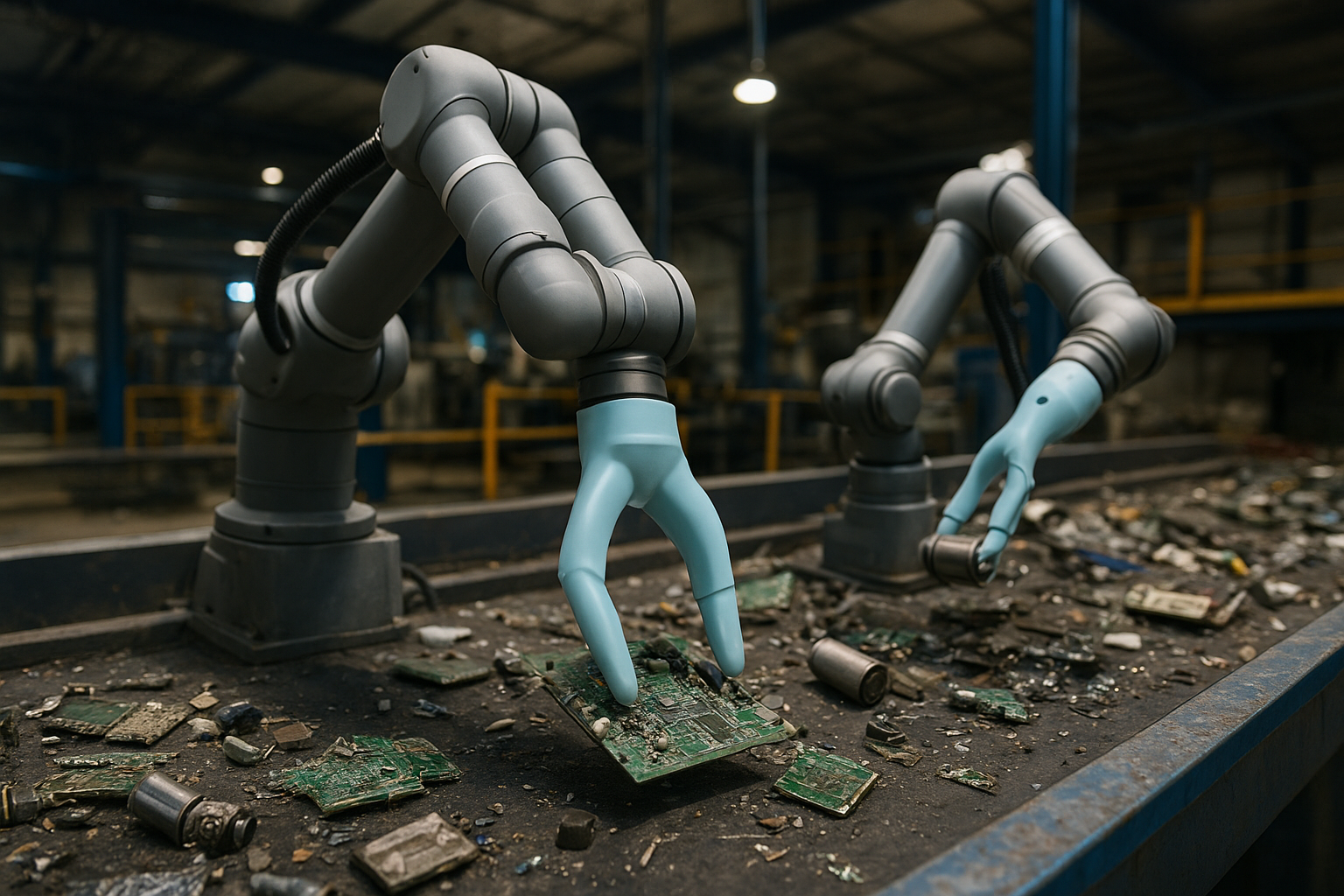
- The delicate manipulation of deformable materials in electronics or agriculture
- The on-demand configuration in multi-SKU, high-mix production environments
This is the missing middle, the space between the binary logic of traditional robotics and the intuitive dexterity of human hands.
Soft robotics, by design, thrives here.
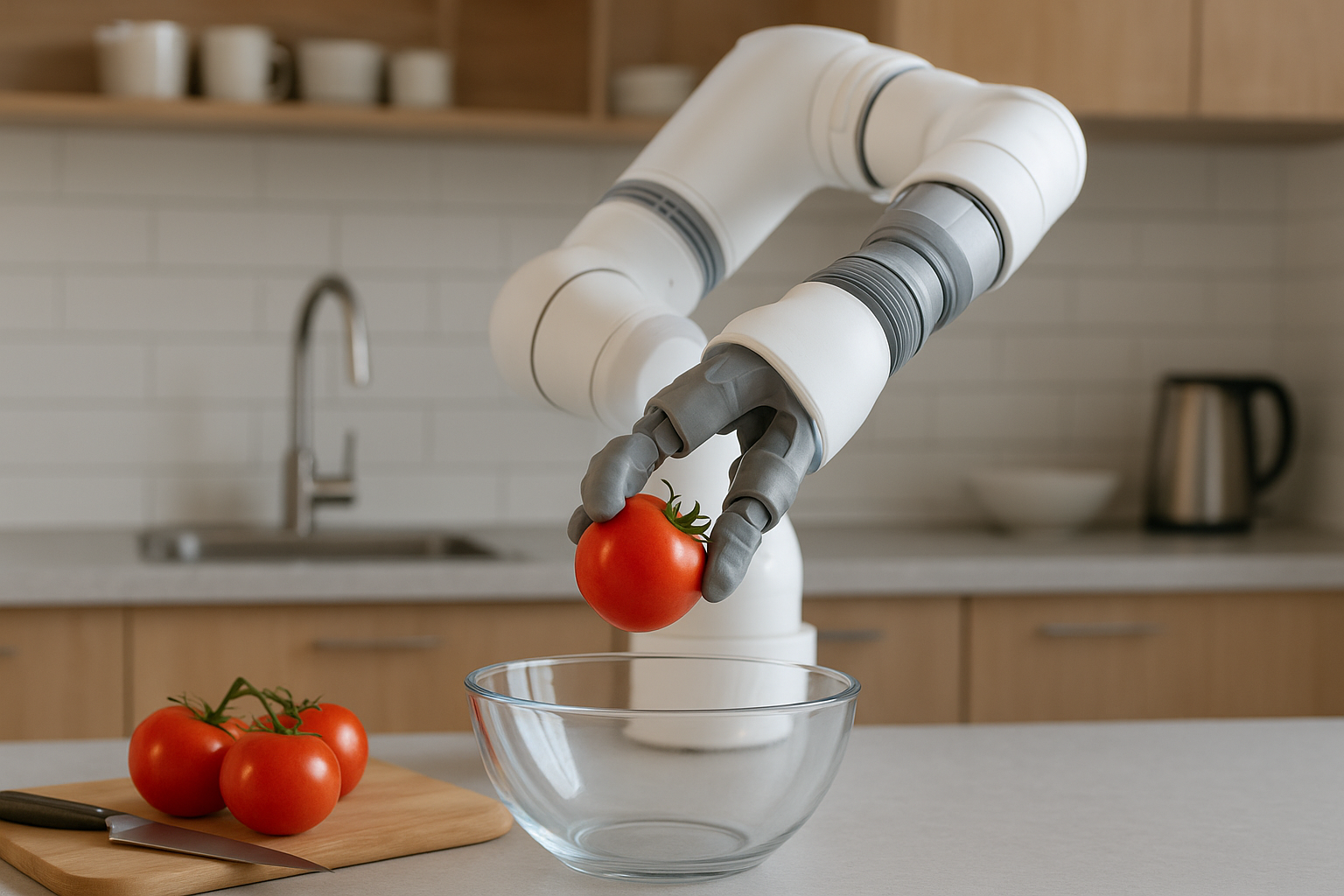
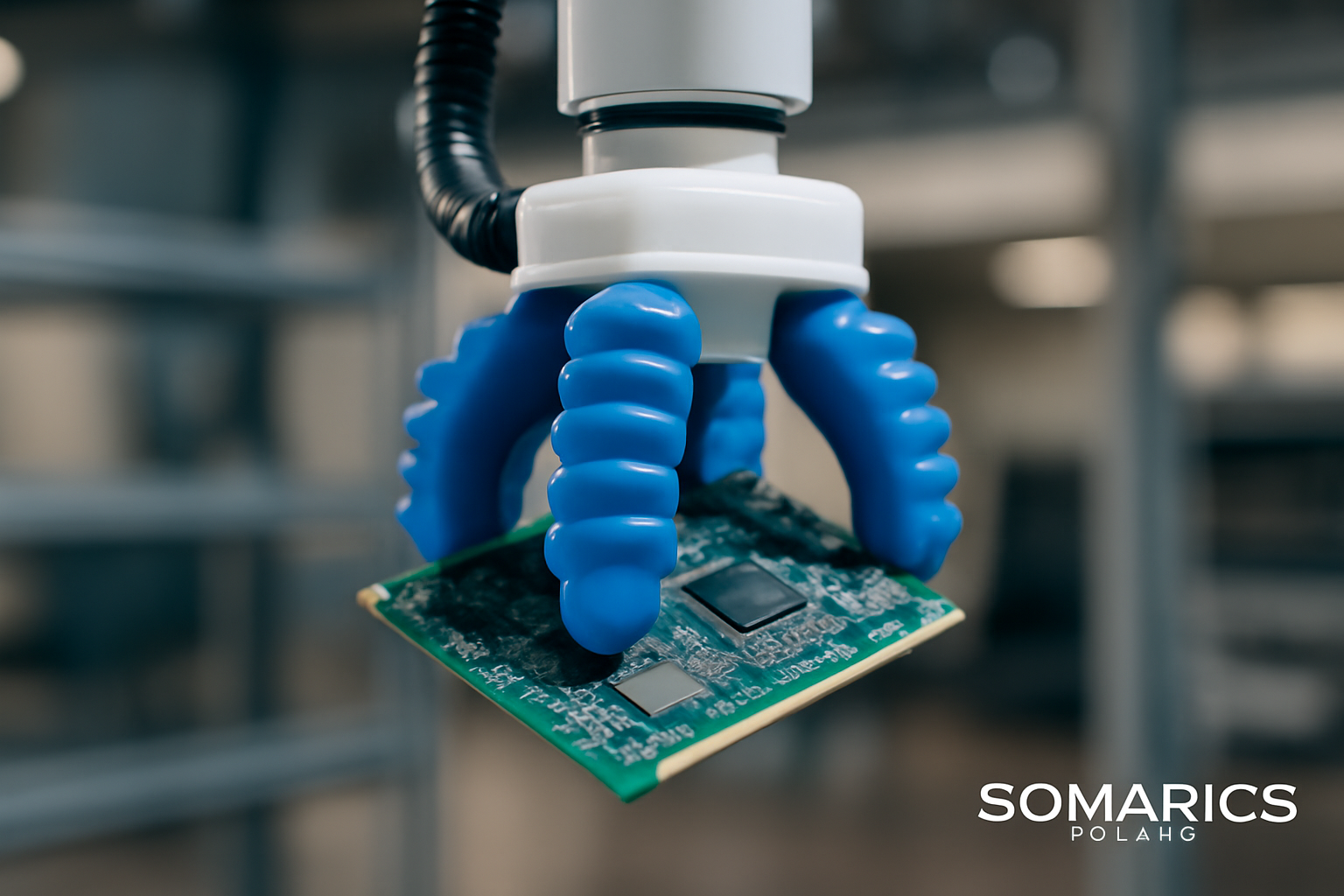
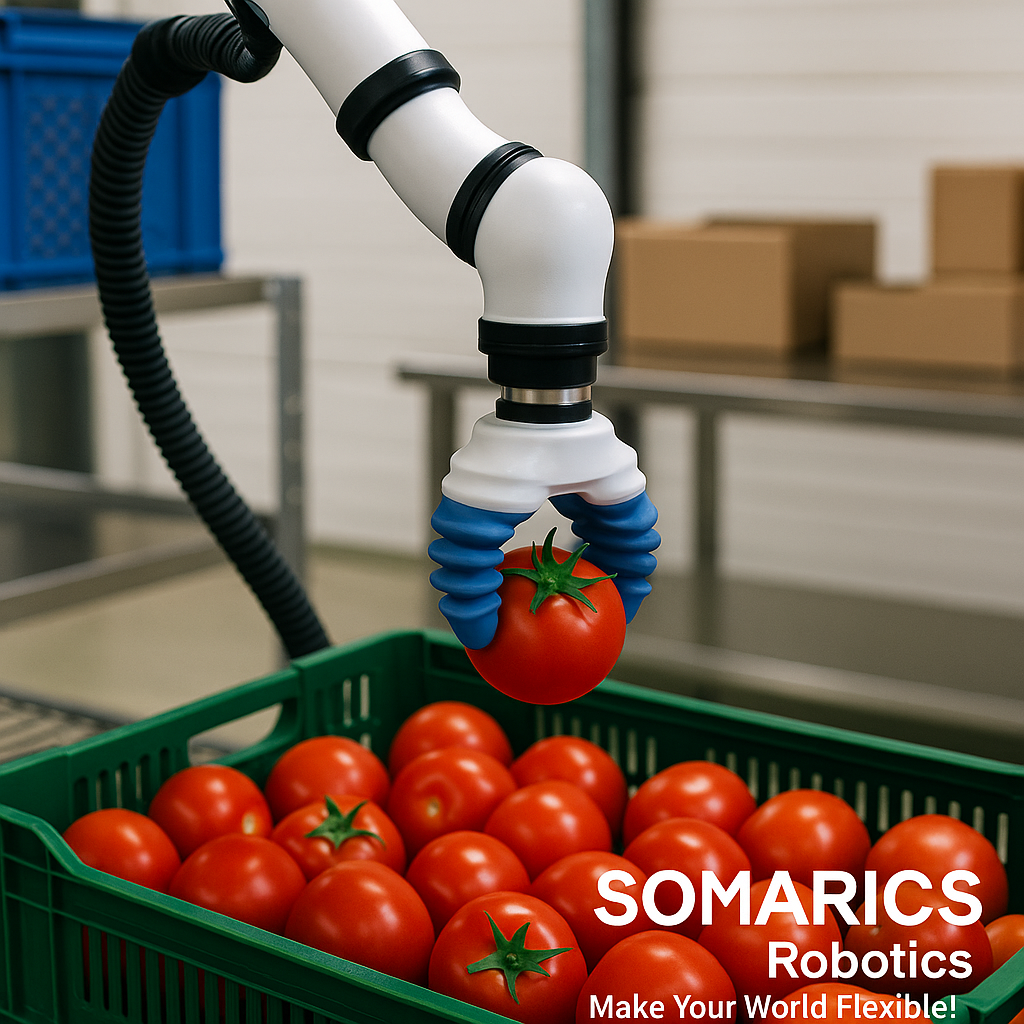
By leveraging compliant materials, pneumatic actuation, and embedded sensing, soft robotic systems like those developed by SOMARICS are capable of interacting safely with fragile, irregular, or unpredictable items, from loose herbs to pre-packaged kits, from shrink-wrapped trays to live plant clusters.
Rather than attempting to replicate brute-force automation, we’ve focused on enabling machines to adjust, conform, and accommodate, building a bridge between industrial repeatability and real-world variability.
Solving the Shortage, Not Just Automating the Obvious
The narrative around automation has long been fixated on cost-cutting or replacing human labor. But the most urgent challenge today is not cost, it’s absence. Absence of hands, of judgment, of safe labor in difficult conditions.
In this reality, soft robotics is not simply a way to automate; it’s a way to stabilize fragile workflows, support overstretched human teams, and reclaim productivity that would otherwise collapse.
1. Reclaiming Lost Productivity in High-Touch Processes
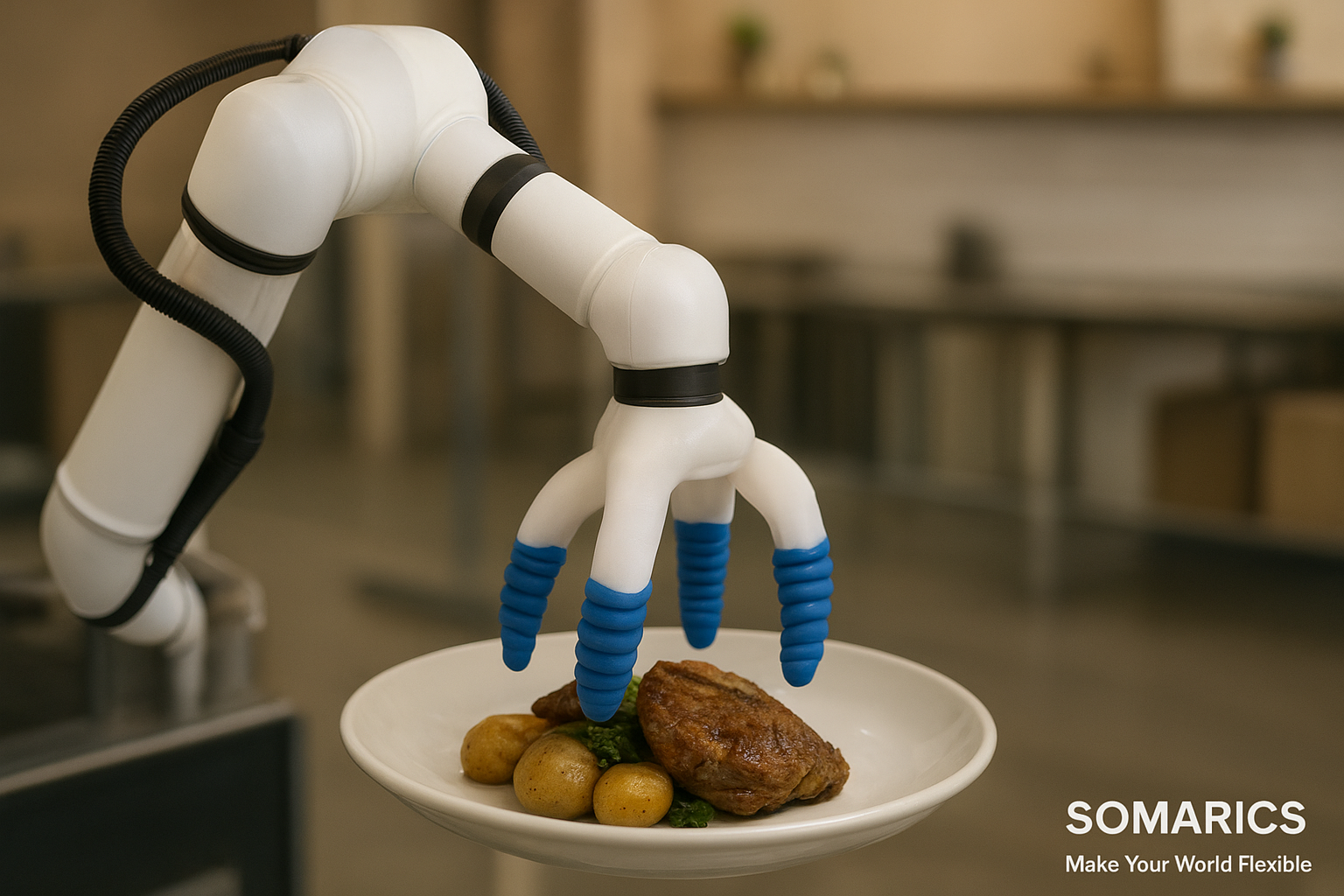
In sectors where variability, speed, and hygiene intersect, like last-mile food packaging or micro-distribution, traditional automation falls short. SOMARICS solutions step in with force-sensitive soft grippers, capable of real-time adjustments for items with subtle shape differences, weight shifts, or surface irregularities.
We allow facilities to scale order volume without sacrificing the handwork quality previously associated only with human labor.
2. Making Automation Viable Where Space and Safety Matter
Compact urban farms, on-site micro-factories, or shared human-robot zones in fulfillment centers require automation that’s not just functional, but coexistable.
SOMARICS systems are built for small footprints, low-noise operation, and zero-collision risk.
Instead of asking facilities to reorganize around robots, we build robots that fit organically into existing workflows, without barriers, cages, or high-speed exclusions.
3. Upskilling the Workforce by Design
Unlike traditional robotic cells that demand system integrators, our approach treats each unit as a plug-and-work appliance, operable by warehouse supervisors, greenhouse technicians, or packaging coordinators after just a few hours of training.
In doing so, we upskill existing staff rather than displace them, giving companies a way to retain experience while modernizing execution.
SOMARICS Soft Robotics: Designed for the Labor Realities of Tomorrow
Where others see soft robotics as an emerging field, we treat it as a manufacturing design language. Our systems are not lab prototypes; they are industrial-grade robotic modules engineered for everyday deployment in demanding, labor-constrained settings.
Core Technical Components:
| Module | Description |
| Adaptive Gripper System | Grip strength adjusts in milliseconds based on object feedback |
| Smart Pneumatic Actuation | Low-pressure, energy-efficient motion for sensitive environments |
| No-Code HMI Interface | Visual programming for frontline operators |
| Edge-Embedded Machine Vision | Identifies item class, size, and status without cloud dependency |
| Fail-Safe Emergency Modes | Controlled release and stop functions under any system error |
Together, these form a resilient, modular backbone that adapts to seasonal labor variation, SKU changes, and urgent demand shifts, without infrastructure overhauls or capital-intensive retrofitting.
SOMARICS soft robotic cells are also future-proofed for interoperability, with built-in APIs for farm management systems, warehouse management platforms, and MES software. Integration is no longer a tech challenge; it’s a configuration decision.
Applications Where Labor Is Shrinking, But Demand Isn’t
Let’s be clear: not every task should be automated. But many tasks are already being left behind. Not because of cost, but because there’s no one available to do them.
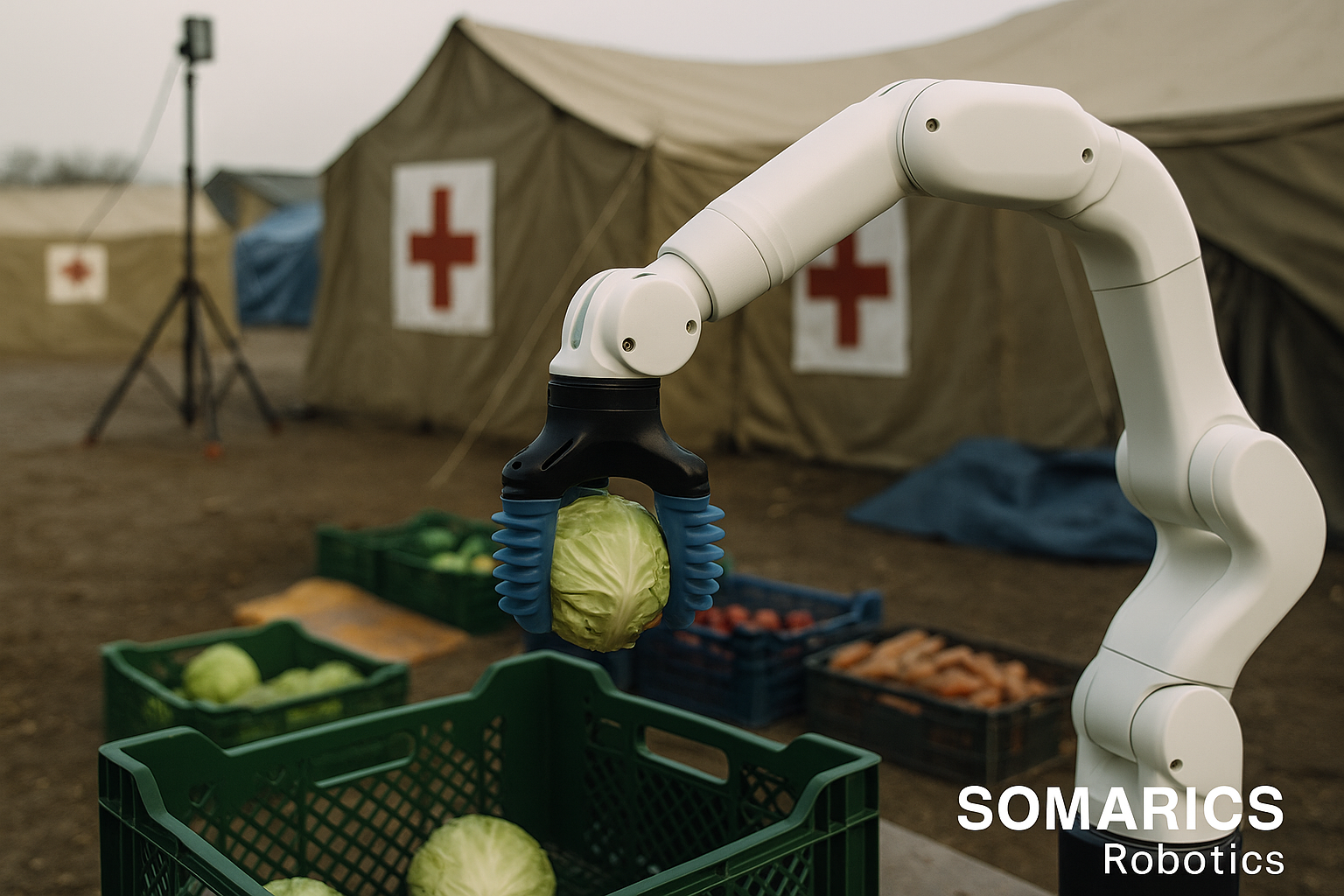
- Fresh food boxing at hyperlocal greenhouses
- Sterile transfer tasks in pharma packaging
- Customized order assembly in flexible warehouses
- Delicate post-inspection handling in electronics
In all these zones, the real pain is the last 5 feet of the workflow. The part is too manual, too nuanced, too unscalable for traditional robotics.
SOMARICS fills that space, quietly, reliably, and safely, allowing human teams to focus on what matters more.
Economic Logic That Scales With Scarcity
We don’t sell robots. We enable continuity of operations.
That’s why SOMARICS systems are designed not just around performance, but around return-on-adaptability, the new ROI of industrial resilience.
Quantified Benefits from Recent Deployments:
✅ Operational and Economic Benefits – Validated in Early-Stage Tests and Simulated Pilots
| Metric | Observed Value | Validation Context |
| Reduction in Human Handling | 65–72% | Observed in semi-automated workflows during internal testing and proof-of-concept trials in produce packaging environments |
| First-Week Operator Onboarding Success | 98% | Based on internal pilot programs with non-technical personnel using no-code interfaces |
| Setup Time per Workstation | < 4 hours | Measured during modular deployments, excluding upstream integration or custom adaptation |
| Yield Preservation in Delicate Items | 12–17% | Projected from simulation-based trials on soft produce handling (e.g., microgreens, berries, tomatoes) |
| Noise Output During Operation | < 40 dB | Measured in lab-scale pneumatic actuation tests for indoor use cases |
Note: All figures are based on SOMARICS’ internal simulation models, lab-scale validations, or controlled pilot environments. Values may vary depending on industry, product type, and integration complexity.
This is automation that fits today’s operational budgets, adapts to tomorrow’s labor realities, and aligns with the long-term ESG and resilience goals of modern industry, without compromise.
Conclusion: Beyond Labor Replacement, Toward Resilience Engineering
The labor shortage isn’t going away. It’s evolving.
What was once a hiring problem has become a systems design challenge. Industries that wait for labor to return will fall behind. Those that adapt will define the next generation of production.
At SOMARICS, we are not here to automate humans out of the picture.
We are here to elevate the role of humans by building systems that handle the burden, not the brilliance, of physical work.
Soft robotics is not soft engineering. It is resilience engineering for a world that must now do more, with fewer hands, and greater expectations.
Facing labor shortages, inconsistent workflows, or fragile product handling?
Let SOMARICS show you how soft robotics can turn your labor gap into a strategic advantage.
Contact our team to discuss a tailored pilot or proof-of-concept deployment.